

Online Gambling Laws in Canada by Province: A 2026 Reference Guide
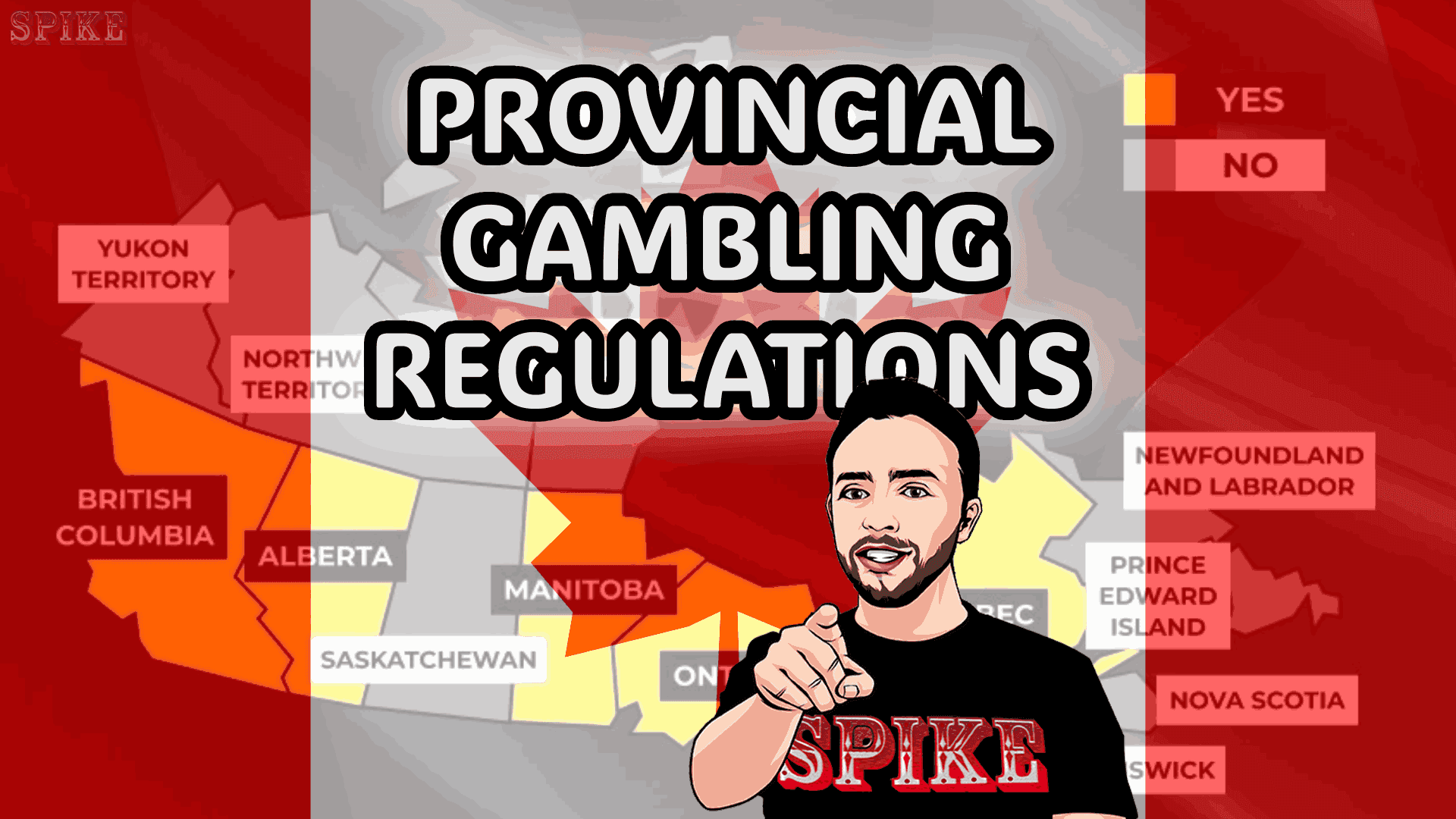
Canada does not have one national gambling law. Each province sets its own rules, its own legal age, and its own approach to online play, and that single fact explains almost every confusing headline you'll read about Canadian online casinos. This guide is built as a reference table, not a story: find your province, see the age, the market type, and the regulator, then read the sections below for the detail behind each entry.
Jump to:
What "Grey Market" Actually Means
You'll see "grey market" used constantly in Canadian gambling coverage, often as shorthand for "anything goes." That's wrong, and it's worth clearing up before anything else.
A grey market simply means: the activity isn't specifically authorized by a provincial regulator, but it also isn't specifically criminalized for the player. Outside Ontario and Alberta, many Canadians who play online slots or casino games at an offshore site are operating in this space. The operator holds a licence, just not a Canadian provincial one. It's typically licensed somewhere like Malta (MGA), Curaçao, or the Kahnawake Gaming Commission, a body based in Mohawk Territory within Quebec.
What grey market does not mean:
It doesn't mean the operator has no oversight at all. A properly licensed offshore site still answers to its licensing jurisdiction's rules on fairness, payouts, and dispute resolution.
It doesn't mean responsible gambling protections disappear. Reputable offshore operators still offer deposit limits, self-exclusion, and session tools, because losing that reputation costs them business.
It doesn't mean the site is automatically safe. Licence quality varies a lot, and "grey" covers everything from well-regulated Kahnawake- or MGA-licensed brands to operators with almost no real oversight.
The practical takeaway: grey market status changes who regulates the operator, not whether the player should apply judgment. Checking the actual licence, not just assuming the platform is fine because "everyone uses it," is the whole point of this guide.
Legal Gambling Age by Province
Canada's legal gambling age is not 18 nationwide, and it is not 19 nationwide either. It splits by province, and getting this wrong is one of the most common errors in gambling content aimed at Canadians.
18 years old: Alberta, Manitoba, Quebec
19 years old: British Columbia, Saskatchewan, Ontario, New Brunswick, Nova Scotia, Prince Edward Island, Newfoundland and Labrador, Yukon, Northwest Territories, Nunavut
This applies to both land-based and online gambling in each respective province. A resident of Manitoba is legally able to gamble at 18, but the same person visiting British Columbia is subject to that province's age of 19 for the duration of their stay. Always state the age relevant to where the player is located, never a single figure for "Canada."
Ontario: The Regulated Market
Ontario was the first Canadian province to open a regulated, competitive private online gambling market. Since April 2022, the Alcohol and Gaming Commission of Ontario (AGCO) has registered and regulated private operators, while iGaming Ontario (iGO) conducts and manages the market through commercial operating agreements.
In practical terms, this means:
Private operators, including international casino and sportsbook brands, can register with AGCO and enter an operating agreement with iGaming Ontario.
Registered sites must meet AGCO standards on player protection, advertising, game fairness, and complaint handling.
Ontario also keeps its Crown corporation, OLG, running its own lottery and gaming products alongside the private iGO-managed market.
If you're asking "is online gambling legal in Ontario," the honest answer is: yes, when the operator is registered by AGCO and contracted with iGaming Ontario. Offshore sites still operate and are used by some Ontario residents, but they fall outside AGCO oversight, meaning a player using one gives up the protections and complaint pathways the Ontario system was built to provide.
Most Other Provinces: The Default Grey Market
Outside Ontario and Alberta, provinces generally run their own government lottery and gaming platforms, such as PlayNow in British Columbia or Espacejeux in Quebec, covering things like online lottery, some casino games, and sports betting through provincial channels. These are legitimate, government-operated products.
But these provincial platforms don't cover the full breadth of casino content many players look for, and these jurisdictions do not have private licensing regimes like those in Ontario and Alberta. As a result, many residents use offshore-licensed operators instead: sites licensed by bodies like the Kahnawake Gaming Commission, the Malta Gaming Authority, or Curaçao's licensing authority.
This is the grey market described earlier. The legal position is not as simple as saying these sites are legal for players: Canadian law primarily governs who may conduct and manage gambling, while the status of play on sites outside a provincial framework can depend on the province and the specific circumstances. What is clear is that these sites are not regulated by the player's province and do not provide the same provincial consumer protections.
Alberta's 2026 Shift
Alberta's regulated private iGaming market launched on July 13, 2026, alongside the existing government-operated PlayAlberta platform. Private operators must be registered with Alberta Gaming, Liquor and Cannabis (AGLC) and sign a commercial agreement with the Alberta iGaming Corporation (AiGC). AGLC provides regulatory oversight, while AiGC handles commercial agreements, anti-money-laundering responsibilities, financial matters, and revenue reporting. The province's legal gambling age remains 18.
Players can verify registered operators through AGLC's public register and should not assume a site is provincially regulated simply because it accepts customers from Alberta.
Kahnawake: Canada's Other Licensing Body
Not every Canadian gambling licence sits with a provincial regulator. The Kahnawake Gaming Commission (KGC), based in the Mohawk Territory of Kahnawake near Montreal, has licensed online gambling operators since the late 1990s and is one of the older, more established licensing bodies in the online gambling industry worldwide.
A KGC licence is Canadian in origin but operates outside the provincial system entirely, since Kahnawake asserts jurisdiction independent of Quebec's provincial gambling framework. Many offshore-facing operators used by Canadian players hold a KGC licence, sometimes alongside a European licence like Malta's. When an operator states it's "Kahnawake licensed," that's a real, checkable credential, distinct from the provincial systems in Ontario and Alberta and from having no licence at all.
Full Province-by-Province Reference Table
| Province/Territory | Legal Age | Market Type | Regulator(s) |
|---|---|---|---|
| Ontario | 19 | Regulated private iGaming market + government platform | AGCO / iGaming Ontario (iGO); OLG |
| British Columbia | 19 | Government platform; offshore commonly used | BCLC |
| Alberta | 18 | Regulated private iGaming market + government platform | AGLC / Alberta iGaming Corporation (AiGC) |
| Saskatchewan | 19 | Government platform; offshore commonly used | SIGA / Sask Lotteries |
| Manitoba | 18 | Government platform; offshore commonly used | MBLL |
| Quebec | 18 | Government platform (Espacejeux); offshore commonly used | Loto-Québec |
| New Brunswick | 19 | Regional government platform; offshore commonly used | Atlantic Lottery Corporation (ALC) |
| Nova Scotia | 19 | Regional government platform; offshore commonly used | Atlantic Lottery Corporation (ALC) |
| Prince Edward Island | 19 | Regional government platform; offshore commonly used | Atlantic Lottery Corporation (ALC) |
| Newfoundland and Labrador | 19 | Regional government platform; offshore commonly used | Atlantic Lottery Corporation (ALC) |
| Yukon | 19 | Limited local offering; offshore commonly used | Professional Licensing and Regulatory Affairs (PLRA) |
| Northwest Territories | 19 | Limited local offering; offshore commonly used | Municipal and Community Affairs (MACA) |
| Nunavut | 19 | Limited local offering; offshore commonly used | Consumer Affairs, Department of Community Services |
No province on this table should ever be described as somewhere gambling is blanket "legal" or "illegal." Each row reflects a market structure, not a green light for any specific operator: the licence of the actual site you're looking at is what determines its standing.
How to Check If an Operator Is Properly Licensed
Before you play anywhere, this is a two-minute check worth doing every time:
Scroll to the site's footer and look for a licence number and issuing authority.
Search the relevant authority's public register or operator directory. AGCO/iGaming Ontario, AGLC, Kahnawake, and the Malta Gaming Authority all publish lists that can be checked.
Check whether the licence is current, not expired or revoked.
If you're in Ontario, confirm the operator appears in iGaming Ontario's regulated-site directory. If you're in Alberta, confirm the operator appears in AGLC's register and is approved under the AiGC framework.
If no licence is stated anywhere, or the licence claim can't be verified on the issuing authority's own site, treat that as a red flag, not an oversight.
This applies regardless of which province you're in. A licence isn't a guarantee of a perfect experience, but its absence is a much stronger warning sign than its presence is a guarantee.
Common Misconceptions
"Grey market means unregulated." Covered above: it means not provincially regulated, not unregulated altogether. The operator's actual licensing body still applies its own standards.
"If a site accepts Canadian players, it's legal in Canada." This claim gets repeated often and it isn't accurate as a blanket statement. Legality and regulatory status depend on the province and on the operator's specific licence, not on whether the site happens to accept Canadian sign-ups.
"Ontario's system means the rest of Canada is unregulated." Alberta now also has a regulated private iGaming market, and the remaining provinces still have legitimate government-run platforms for lottery, casino products, and sports betting. What most jurisdictions lack is a competitive private licensing regime, not regulation altogether.
"Kahnawake licensed means government-approved." A KGC licence is a real, longstanding credential, but it's a separate system from provincial regulation. It's worth understanding on its own terms rather than assuming it functions like an AGCO licence.
Responsible Gambling Tools Available to Canadian Players
Whichever province you're in, and whichever type of operator you use, the same baseline habits apply:
Set a spending limit you can afford to lose before you start, and treat wagered money as spent.
Use deposit limits, time limits, and session reminders where the platform offers them; most licensed operators, provincial or offshore, provide at least some of these.
Self-exclusion programs exist both at the provincial level and, in many cases, directly through operators, letting you block your own access for a set period or indefinitely.
The Responsible Gambling Council offers Canada-wide information and support resources through its Help for Problem Gambling hub, including Find Gambling Help for Canadians and Find a Canadian Treatment Centre; general enquiries can be made at +1 416-499-9800 from 9 a.m. to 5 p.m. Eastern.
Ontario players specifically can access ConnexOntario for confidential, free support at 1-866-531-2600, available 24/7.
Gambling is entertainment with a real cost attached, not a way to make money, and none of the market structures described in this guide change that basic fact.
FAQ
Is online gambling legal in Canada?
There's no single national answer. Ontario and Alberta regulate private operators, while other provinces rely mainly on government platforms and see widespread grey-market use of offshore sites. The relevant province and the operator's credentials determine the answer.
Is online gambling legal in Ontario specifically?
Yes, when the operator is registered by AGCO and contracted with iGaming Ontario. Sites outside that framework are not provincially regulated.
What is the legal gambling age in Canada?
It is 18 in Alberta, Manitoba, and Quebec, and 19 in every other province and territory.
What does "grey market" mean for online casinos in Canada?
It describes an operator outside the player's provincial framework, often licensed by a body such as Kahnawake or Malta. That status is not the same as having no oversight, but provincial protections do not apply.
What is the Kahnawake Gaming Commission?
It is a licensing body based in the Mohawk Territory of Kahnawake that regulates operators independently of Canada's provincial systems.
Does Alberta have a regulated private online gambling market?
Yes. It launched on July 13, 2026. Private operators must register with AGLC and sign a commercial agreement with the Alberta iGaming Corporation (AiGC).
Can I get in trouble for playing at an offshore casino as a Canadian?
Historically, enforcement in Canada has generally focused on those conducting or managing unauthorized gambling rather than individual online players, but legal exposure and enforcement practices can vary by province and circumstance. This is general information, not legal advice.
Are provincial lottery platforms like PlayNow or Espacejeux the only provincially regulated option outside Ontario and Alberta?
In most provinces, yes. Offshore sites may still accept residents, but they operate outside the local provincial framework.
How do I know if an online casino's licence is real?
Match the licence details in the site's footer against the issuing authority's official register or operator directory, including AGCO/iGaming Ontario, AGLC, Kahnawake, or another named regulator.
Does a KGC or offshore licence mean the same protections as an Ontario licence?
No. A legitimate offshore licence may impose fairness and dispute-resolution standards, but its protections and enforcement differ from Ontario's provincial framework.
Conclusion
Canadian gambling law splits along provincial lines, not one national standard, and that single structural fact drives nearly every question in this space: the age you need, whether a private regulated market exists where you live, and what "licensed" actually means for the site in front of you. Ontario regulates private operators through AGCO and iGaming Ontario, while Alberta's private market operates through AGLC registration and AiGC commercial agreements. Most other provinces run government platforms alongside a widely used grey market of offshore operators, commonly licensed through bodies like Kahnawake or Malta. None of that changes the basics: check the licence, know your province's legal age, and treat gambling as entertainment with a cost, not an income source.
For more on how one province's regulated system actually works, see our piece on how Ontario's regulated iGaming market works. For Alberta, see our coverage of Alberta's regulated private online market.
You must be of legal gambling age in your province (18 or 19) to play. Gambling is entertainment with a cost, not a way to make money. If you or someone you know needs support, resources like the Responsible Gambling Council and provincial helplines are available through the RGC's Find Gambling Help for Canadians directory and province-specific services, including Ontario's ConnexOntario at 1-866-531-2600, available 24/7.