


What Is RTP in Slots? RTP and Volatility Explained
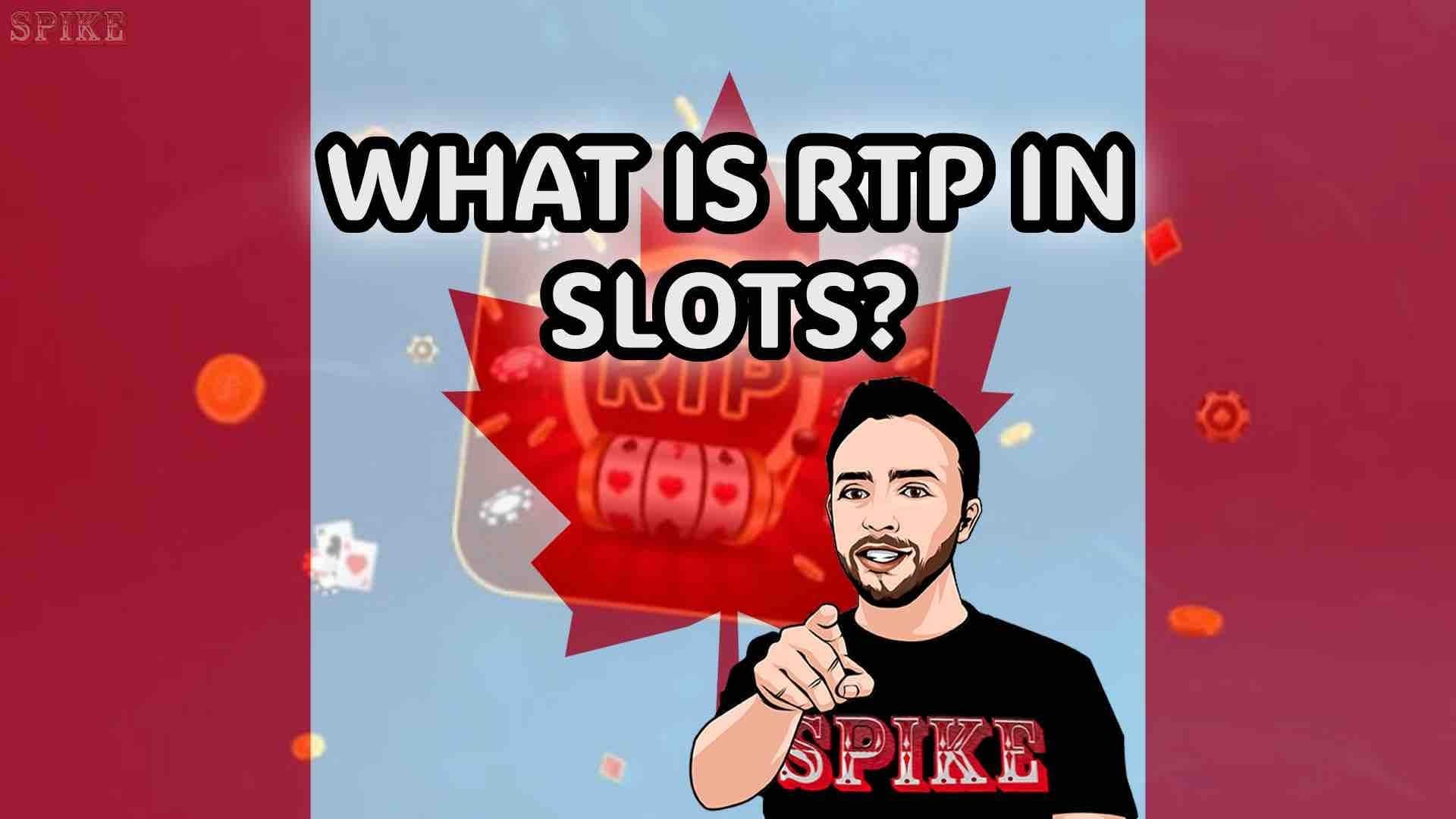
RTP (Return to Player) is the theoretical percentage of all money wagered on a slot that the game returns to players over the long term, calculated across millions of spins. It is not a promise about your next session. Pair it with volatility, which describes how often and how big those returns tend to land, and you get a much clearer picture of how a slot actually plays.
What RTP Actually Means (and What It Doesn't)
RTP is a long-term statistical average, published by the provider after extensive simulation and testing. A slot with a 96% RTP theoretical value returns, on average, C$96 for every C$100 wagered, but that average only becomes visible over an enormous number of spins, not in a single session, an hour, or even a weekend.
This is where a lot of confusion starts. A 96% RTP does not mean you'll get back 96% of your own money tonight. You could lose every spin in a short session, or hit a big win in your first ten spins. RTP describes the machine's behaviour over its lifetime, not your personal outcome.
It's also worth being precise about where the number comes from. The theoretical RTP declared by the provider is the source of truth: it comes from the game's mathematical model, not from a screenshot, a forum post, or a third-party estimate. For example, NetEnt's official page currently lists Starburst at 96.08% RTP, while Pragmatic Play lists Sugar Rush at 96.50%, so exact figures should be checked against the provider's official page for each title.
One nuance that often gets glossed over: some operators run a reduced-RTP version of a slot alongside the standard one. Some titles are available in multiple certified RTP versions, so check the specific game info on your chosen operator's site to confirm which version you're playing. The safest approach is to treat the RTP shown for that specific version as the relevant figure.
Volatility: The Other Half of the Story
Volatility, sometimes called variance, tells you how a slot's wins are distributed, not how much it pays back overall. Low volatility slots pay more often, in smaller amounts. High volatility slots pay less often, but the wins, when they land, are theoretically larger. Medium volatility sits between the two.
Neither is "better." A low-volatility slot suits a player who wants a smoother, longer session with steady small wins. A high-volatility slot suits someone comfortable with dry stretches in exchange for the chance at a bigger hit. This is a preference, not a strategy, and volatility never guarantees a jackpot is close: every spin is independent and random.
These three terms get tangled together constantly, so it helps to understand RTP and volatility alongside hit rate and separate them cleanly.
| Term | What it measures | What it does NOT tell you |
|---|---|---|
| RTP | Average return over the long term | What you'll win today |
| Hit rate | How often a spin produces any win | How big that win will be |
| Volatility | The size and spread of wins | Whether a big win is "due" |
A slot can have a high RTP and a low hit rate at the same time: it pays back well over the long run, but individual spins rarely win, and when they do, the amounts are larger. That combination often shows up in high-volatility games. Conversely, a slot with a high hit rate and lower volatility pays frequently, in small amounts, and can still land on a perfectly respectable RTP.
How RTP and Volatility Work Together: Real Examples
Looking at real slots side by side makes the relationship easier to feel rather than just read about.
| Slot | Theoretical RTP declared | Volatility | Typical session feel |
|---|---|---|---|
| Ronin Stackways | 96.35% (highest available RTP version) | Low (2/5) | Frequent small wins, smooth balance swings |
| Le Bandit | 96.34% (highest available RTP version) | Medium (3/5) | Balanced mix of small wins and occasional bigger hits |
| Chaos Crew | 96.30% (highest available RTP version) | High (5/5) | Longer quiet stretches, rarer but larger wins when they land |
Hacksaw Gaming's official game pages list Ronin Stackways at 2/5 volatility with RTP versions of 96.35%, 94.33%, 92.24% and 88.23%; Le Bandit at 3/5 with RTP versions of 96.34%, 94.23%, 92.17% and 88.36%; and Chaos Crew at 5/5 with RTP versions of 96.30%, 92.40% and 88.40%. The RTP actually available to a player can therefore depend on which certified version an operator deploys.
The pattern to notice is that a high-RTP, low-volatility slot can feel ‘easier’ to play for a long time on a small budget, while a similar-RTP, high-volatility slot can burn through a session budget faster even though its long-term average is comparable. Same RTP range, very different lived experience. That's the whole reason volatility matters as much as RTP.
How to Use This When Choosing a Slot
A few practical questions help translate the theory into a decision:
How long do you want to play on your budget? Lower volatility tends to stretch a session further.
Are you comfortable with quiet stretches? Higher volatility means longer waits between wins, in exchange for potentially bigger ones.
Have you checked the RTP in the game info screen, not just a review site? In-game info is the most current source and shows which version you're actually playing.
Are you playing the demo first? Demo mode, played with no real money, is the best way to feel a slot's volatility firsthand before wagering.
None of this changes the underlying math. RTP and volatility describe a game's long-term shape; they don't tell you what the next spin holds, and no pattern of past spins makes a win "due."
A Quick Word on Responsible Play
RTP and volatility are useful for understanding how a slot behaves, not for finding a way to beat it. Slots are RNG-based games of pure chance: no strategy, staking pattern, or timing changes the house edge. Treat any money wagered as spent on entertainment, set a spending limit you're comfortable losing before you start, and stop if a session stops being fun. You must be of legal gambling age in your province to play, which is 18 in Alberta, Manitoba and Quebec, and 19 elsewhere in Canada.
If gambling stops feeling like entertainment, the Responsible Gambling Council's Help for Canadians directory lists current provincial problem-gambling helplines and support resources across Canada. For Ontario residents, ConnexOntario provides free, confidential 24/7 gambling support at 1-866-531-2600, by texting CONNEX to 247247, or through live chat.
FAQ
Is a higher RTP always better?
Generally, a higher declared RTP means a better long-term average return, all else equal. But it's only half the picture: two slots with similar RTP can feel very different depending on volatility, so RTP alone shouldn't be the only factor in choosing a game.
Does RTP predict what I'll win today?
No. RTP is a theoretical figure calculated over millions of spins. In any single session, your result can land far above or below that average purely due to randomness.
What's the difference between volatility and hit rate?
Hit rate is how often a spin wins at all. Volatility is how big those wins tend to be and how spread out they are. A slot can have a low hit rate but high volatility, meaning wins are rare but larger when they occur.
Can a slot have a "hot" or "cold" streak?
Players sometimes describe a run of wins as "hot" and a dry stretch as "cold," but these are just descriptions of what already happened. Every spin is generated independently, so past spins don't affect what comes next, and a slot is never "due" to pay.
Do all operators offer the same RTP for the same slot?
Not necessarily. Some operators may run a reduced-RTP version of a title. Always check the game info on the specific operator's site for the version you're playing, since it can differ from the figure quoted elsewhere.
Is demo mode useful for understanding volatility?
Yes. Demo mode uses play money, so it's a low-pressure way to feel how often a slot pays and how big those wins are, before deciding whether its volatility matches what you're looking for. Demo results don't predict real-money outcomes.
Why do reviews say "theoretical" RTP instead of just "RTP"?
Because the number is a long-run statistical average, not a guarantee for any individual player or session. "Theoretical" is the accurate way to describe it.
RTP tells you what a slot returns on average over the long term; volatility tells you how that return is distributed across wins. Read together, not separately, they give a realistic sense of how a game will actually feel to play, which is far more useful than chasing a single high RTP number in isolation. For a deeper look at how hit frequency fits into this picture, see our guide to volatility and RTP for Canadian players. Gambling is entertainment with a cost, not a way to make money: play within a budget you're comfortable losing, and only if you're of legal age in your province (18 or 19).