


Slot Volatility Explained: A Complete Guide for Canadian Players
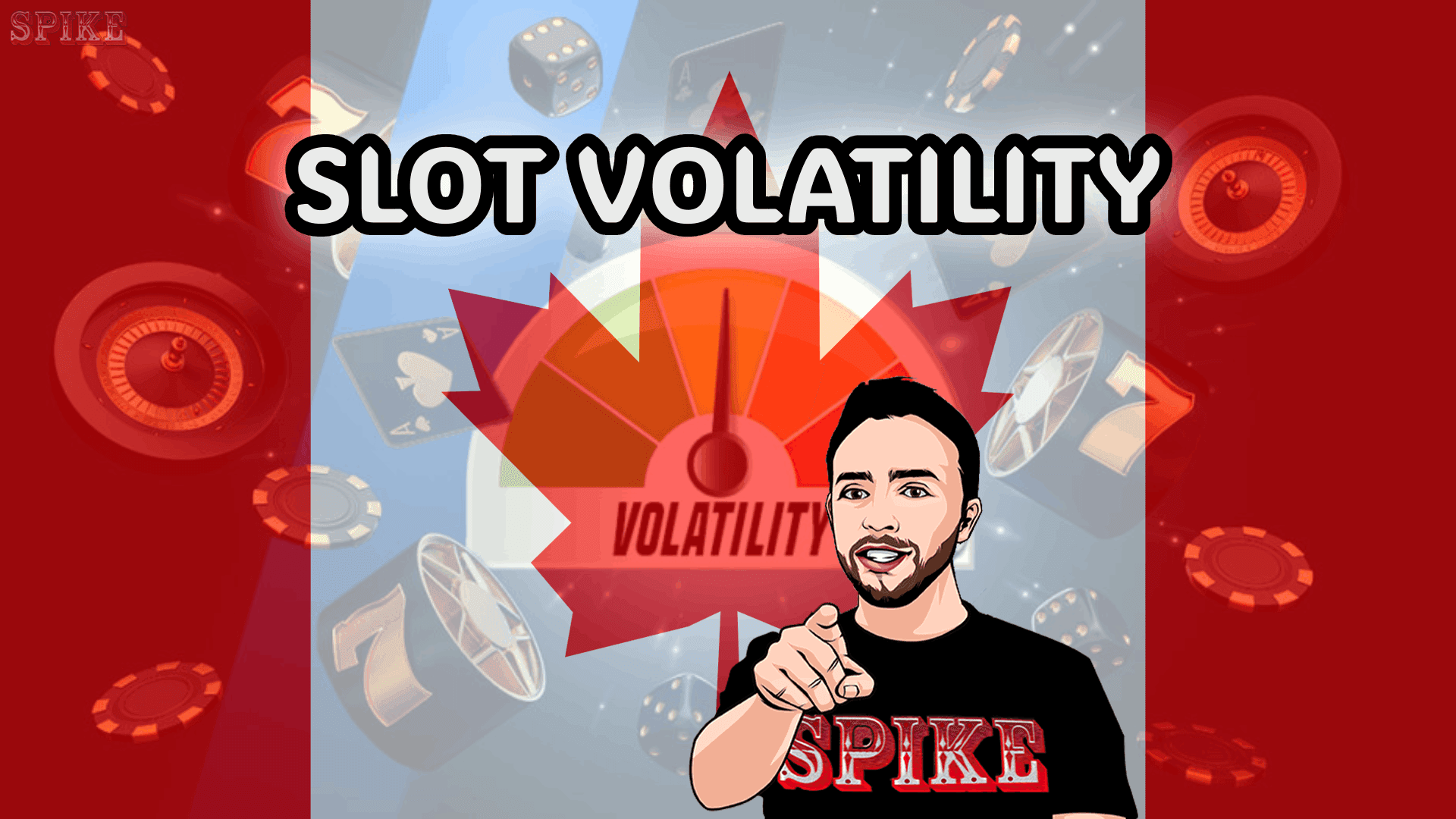
Volatility is one of the most useful things to understand before you spin. It tells you how a slot distributes its payouts: frequently in smaller amounts, or rarely in potentially larger ones. It does not predict outcomes, and it does not change the house edge. But it does have a real effect on how a session feels, how long your bankroll lasts, and whether a given slot fits your playing style and budget.
This guide covers everything from the basic definition to how volatility interacts with RTP, hit frequency, and your personal bankroll. Canadian context throughout: prices in $, age requirements province-aware (18 in Alberta, Manitoba and Quebec; 19 elsewhere).
Gambling is entertainment, not a way to make money. Slot outcomes are driven by an RNG (Random Number Generator) and are independent from one spin to the next. No volatility level, betting pattern, or strategy can guarantee a win or change the house edge. Play within a budget you can afford to lose.
Table of contents:
1. What is slot volatility?
Volatility (sometimes called variance) describes how a slot's wins are spread out over time. A high-volatility slot concentrates its payout potential into infrequent but theoretically larger wins. A low-volatility slot spreads smaller wins across more frequent spins. A medium-volatility slot sits between the two extremes.
The key word is "theoretically." Volatility is a statistical description of a slot's long-run payout pattern, not a guarantee that any specific session will look like that pattern. Over thousands of spins the distribution tends to match the design, but in a short session of a hundred spins, almost anything can happen.
Volatility is set by the game designer and baked into the math model. The RNG produces outcomes; the math model determines how those outcomes are weighted. Changing your bet size, the time of day you play, or the casino you use does not change a slot's volatility.
2. The three levels: low, medium, and high
Low volatility
Low-volatility slots land wins more often. The wins are smaller relative to the bet, but they come frequently enough to keep your balance ticking along. These slots tend to suit players who prefer longer sessions on a modest budget, or who find long dry spells frustrating.
Medium volatility
Medium-volatility slots balance frequency and size. You can expect a mix of small, regular wins and occasional larger payouts. Most slots on the market sit somewhere in the medium range, which is partly why providers sometimes distinguish between "medium-low" and "medium-high" within this band.
High volatility
High-volatility slots pay less often. When they do pay, the wins can be substantially larger relative to the stake, and the slot's theoretical maximum win (max win multiplier) is usually higher. The trade-off is that long stretches with few wins, or even a run of losses, are part of the normal experience. These slots tend to suit players with a higher tolerance for variance and a bankroll sized for longer dry spells.
| Low Volatility Frequent wins Smaller amounts, longer sessions |
| Medium Volatility Balanced Mix of small and occasional larger wins |
| High Volatility Infrequent wins Larger potential, longer dry spells |
3. Volatility vs RTP: not the same thing
This is the most common point of confusion, so it is worth being direct: volatility and RTP measure completely different things, and conflating them leads to poor decisions.
RTP (Return to Player) is the percentage of all money wagered that a slot returns to players over a very large number of spins, typically stated as a percentage (e.g. 96.5%). It measures the size of the house edge: a 96.5% RTP means the house keeps, on average, 3.5% of all bets placed over the long run. RTP says nothing about how those returns are distributed.
Volatility describes the shape of the distribution. Two slots can share an identical RTP of 96% but behave very differently in practice: one might return most of that 96% through frequent small wins (low volatility), while the other concentrates it into rare large wins (high volatility).
| Concept | What it measures | Useful for |
|---|---|---|
| RTP | Long-run percentage returned to players | Comparing the house edge across slots |
| Volatility | How wins are distributed (frequency vs size) | Matching a slot to your session style and budget |
| Hit frequency | How often any winning combination lands | Understanding how often wins appear (see Section 4) |
Note: these three values are independent. A slot can have high RTP, high volatility, and low hit frequency all at once.
Important RTP note: RTP is a theoretical figure calculated over millions of spins. It does not indicate what you will win or lose in any single session. Some operators also run a reduced-RTP version of a slot; always check the game info at the operator you use to confirm which RTP version is live.
4. Volatility vs hit frequency
Hit frequency is how often a spin produces any winning combination, expressed as a percentage. A hit frequency of 25% means roughly 1 in 4 spins produces a win of some kind.
Hit frequency and volatility usually correlate: low-volatility slots tend to have higher hit frequencies, and high-volatility slots tend to have lower hit frequencies. But this is not a hard rule. A slot can be designed with a high hit frequency (wins land often) but still be medium-high volatility, because many of those wins are tiny (less than the stake) while the rare bigger wins create the variance. Similarly, a low hit frequency does not automatically mean the slot is ultra-high volatility.
The distinction matters in practice. If you see that a slot has a 35% hit rate, that sounds reassuring until you realize many of those "wins" return less than the amount you staked. The net effect on your bankroll can still be negative over time, as the house edge predicts.
5. All three concepts together: a practical example
Imagine two fictional slots, both with a declared RTP of 96%:
| Metric | Slot A | Slot B |
|---|---|---|
| RTP | 96% | 96% |
| Volatility | Low | High |
| Hit frequency | 38% (approx.) | 12% (approx.) |
| Typical win size (per winning spin) | 0.5x - 3x stake | 0.1x - 200x stake |
These figures are illustrative only. Always check the paytable of the specific slot you play.
On a $50 session budget at $0.50 per spin (100 spins), Slot A lands wins on roughly 38 spins, most of them small. Your balance fluctuates gently. Slot B lands wins on roughly 12 spins; eight of those might return only a fraction of your stake, but the remaining four might be larger. Your balance swings more dramatically. Either way, the house edge is essentially identical over the long run.
Neither slot is "better" in an objective sense. The question is which pattern suits your session goals and budget.
6. Volatility and your bankroll
Volatility has a direct, practical effect on how long your bankroll lasts and how much you need in reserve to ride out a dry spell.
With a high-volatility slot, a longer run without a significant win is part of the statistical landscape. If your budget is $40 and the slot might not produce a meaningful win for 80-150 spins at a given stake, there is a real chance of burning through the budget before a larger win arrives. That is not a malfunction or bad luck. It is the game working as designed.
A rough practical guideline used by experienced players: size your session stake so you have at least 100-200 spins from your budget. On a high-volatility slot, 200+ spins is a more comfortable buffer. At $0.20 per spin, $40 gives you 200 spins. At $1.00 per spin, the same $40 gives you only 40 spins, which is a very short sample.
This is not a strategy for winning. Sizing your stakes relative to your budget simply helps you stay within the entertainment budget you set. Outcomes are still RNG-driven and independent. Never chase losses by increasing your stake, and never bet money you cannot afford to lose.
7. How to find a slot's volatility
Providers handle volatility disclosure inconsistently. Here are the most reliable places to check:
The in-game paytable or rules page is the first place to look. Most modern slots include a volatility indicator (often shown as a bar graph or a label: low, medium, high) in the game's information screen. This is the provider's own declaration.
The provider's official game page often lists technical specs including volatility, RTP, hit frequency, and max win. Pragmatic Play, Play'n GO, and Hacksaw Gaming are among providers who publish this data directly.
Third-party slot databases compile provider data, but treat these as secondary sources. Always cross-reference with the provider or the in-game rules.
What you cannot rely on: rumors in player forums, general "hot/cold" lists, or the fact that you happened to have a big win recently. A slot does not become lower volatility because it just paid out, and it does not become "overdue" for a win because it has been quiet. Each spin is independent.
8. Real examples: high volatility vs low volatility
A high-volatility example: Dead or Alive 2
Dead or Alive 2 by NetEnt is a widely cited example of a high-volatility slot. Its declared theoretical RTP is 96.80%. The slot is known for long spells without significant wins and a very high theoretical max win multiplier of 100,000x. The free spins feature can produce outsized results, but it may take many base-game spins before triggering. Canadian players should check which RTP version their operator runs in the game's information screen.
A low-volatility example: Starburst
Starburst by NetEnt is a frequently cited low-volatility example. Its declared theoretical RTP is 96.09%. Wins land comparatively often and tend to be modest in size. The expanding wild re-spin mechanic is the main feature. Starburst suits players who prefer a calmer session pattern where the balance moves in smaller increments. Again, confirm the RTP version with your operator.
Related guides on Spike Slot Canada:
9. Canadian context
Most online slots available to Canadian players outside provincially regulated markets are offered by offshore operators in the so-called "grey market." Ontario has run a regulated private iGaming market since April 2022 under the AGCO (Alcohol and Gaming Commission of Ontario) and iGaming Ontario. Alberta launched its regulated private iGaming market on July 13, 2026: operators must be registered with Alberta Gaming, Liquor and Cannabis (AGLC) and have a commercial agreement with the Alberta iGaming Corporation (AiGC). Only operators admitted to the relevant provincial framework are provincially regulated for players in Ontario or Alberta. In the other provinces and territories, operators licensed by bodies such as the Malta Gaming Authority (MGA) or the Kahnawake Gaming Commission are common, but they are not overseen by a Canadian provincial authority.
What this means for volatility and RTP: the RTP version running on a given slot can differ by operator, regardless of where that operator is licensed. Always open the game's information screen and check the declared RTP and, where available, the volatility level, at the specific operator you use. Never assume the RTP figure you read in a review applies to every operator.
Stake sizes and currency: operators that support Canadian-dollar accounts display balances and bets in C$. Minimum bets vary by slot and operator, but many modern slots start at $0.10 per spin, making it feasible to run a meaningful session on a modest budget even on higher-volatility titles, provided you size stakes carefully.
Legal gambling age in Canada is set by province: 18 in Alberta, Manitoba, and Quebec; 19 in all other provinces and territories. You must be of legal gambling age in your province to play.
10. Common mistakes to avoid
Confusing RTP with volatility is the most frequent error. A 97% RTP slot is not "safer" than a 95% RTP slot in the short run; if it is also high volatility, your session experience can still involve long losing streaks. RTP is a long-run figure. Volatility shapes the short-run texture.
Treating volatility as a prediction tool is another mistake. High volatility does not mean a big win is "due." Each spin is independent. The RNG has no memory. A slot that has not paid significantly in 200 spins is not more likely to pay on spin 201 than it was on spin 1.
Increasing stakes to "beat" volatility is perhaps the most harmful mistake. If a high-volatility slot is not paying as expected, raising the stake does not improve your statistical position. It only increases your potential loss per spin.
Ignoring the demo mode when testing a new slot is a missed opportunity. The demo version lets you experience the volatility pattern of a slot without risking real money. Demo results do not predict real-money outcomes, but they give you a feel for how often the bonus triggers, how the base game plays, and whether the payout rhythm suits you.
11. Responsible gambling note
Slots are games of chance. No knowledge of volatility, RTP, or hit frequency changes the house edge or guarantees a win. Gambling should be treated as paid entertainment: set a budget before you play, treat that money as spent the moment you put it in, and stop when the budget is gone.
If gambling is affecting your finances, relationships, or mental health, help is available. Contact the Responsible Gambling Council (RGC) for information and resources on safer gambling and problem gambling prevention. If you are in Ontario, contact ConnexOntario or call 1-866-531-2600 for free, confidential 24/7 support and referrals. Gambling support services are available in every Canadian province and territory through dedicated helplines and treatment programs. Tools such as deposit limits, time limits, and self-exclusion are available through most operators and provincial programs.
You must be of legal gambling age in your province (18 in Alberta, Manitoba and Quebec; 19 everywhere else) to play for real money.
12. FAQ
What does slot volatility mean?
It is the slot's long-run payout pattern. Low volatility generally means more frequent, smaller wins, while high volatility generally means less frequent wins with greater potential size. It does not predict an individual session.
Is volatility the same as RTP?
No. RTP measures theoretical return over a very large number of spins; volatility describes how that return is distributed. Two slots can therefore share the same RTP while producing very different session patterns.
What is slot variance?
Variance is another term for volatility. The two words are used interchangeably in the slots industry and mean the same thing: the statistical spread of a slot's payout distribution.
Are high volatility slots better for winning?
Not in any objective sense. High volatility slots offer the possibility of larger wins per session, but they also carry longer losing streaks. The house edge (the complement of RTP) is present regardless of volatility level. Neither high nor low volatility is inherently "better," they suit different playing styles and bankrolls.
How do I know if a slot is high or low volatility?
Check the in-game rules or paytable screen: most modern slots include a volatility indicator. You can also check the provider's official game page, which typically lists volatility alongside RTP and max win data. If neither source is available, third-party slot databases can point you in the right direction, but always cross-reference with the provider.
Does volatility change depending on the casino?
Volatility is set by the game developer and does not change between operators. However, RTP can vary by operator: some casinos run a version of a slot at a reduced RTP. The volatility level stays the same; the theoretical return on each spin changes. Always check the game's information screen at the operator you use.
Can I change a slot's volatility with my bet size?
No. Volatility is a fixed mathematical property of the slot. Changing your stake changes the nominal value of wins and losses, but the statistical distribution of outcomes remains the same.
What is hit frequency and how is it different from volatility?
Hit frequency is how often a spin produces any winning combination, expressed as a percentage (e.g. 25% means roughly 1 in 4 spins wins something). Volatility describes how the size of those wins is distributed. Low volatility usually goes with higher hit frequency, but the relationship is not absolute: some slots have frequent small wins (high hit rate, low volatility) while others pay rarely but large (low hit rate, high volatility).
What is a good bankroll for high volatility slots?
There is no guaranteed safe amount, but a practical approach is to size your stake so your budget covers at least 150-200 spins. At $0.20 per spin, $40 covers 200 spins. At $1.00 per spin, the same $40 covers only 40 spins, which is a very short sample for a high-volatility game. Set a budget you are comfortable losing entirely before you start, and treat it as the cost of entertainment.
Is a "hot" or "cold" slot related to volatility?
No. "Hot" or "cold" are informal descriptions of a recent run of results. They describe the past only and say nothing about future outcomes. Slots use an RNG, so each spin is independent of all previous spins. A slot that has not paid in 100 spins is not "due" for a win, and a slot that just paid a large amount is not "spent." Volatility describes the long-run statistical pattern; it does not make any spin more or less likely based on history.
What is medium volatility in slots?
Medium volatility combines relatively regular smaller wins with occasional larger payouts. Providers may also label games within this range as medium-low or medium-high.
Can I try a slot's volatility in demo mode before playing for real?
Yes. Demo mode lets you experience the game's pace and feature frequency without staking real money. Its results do not predict future real-money outcomes, but it can help you decide whether the slot's rhythm suits you.